Mam’s father, Thomas Cassidy, died in September 1954, the same year that Mam and Dad were married and her first born in November. Between 1954 and 1965 they had six children, and there was also a miscarriage between the first three and the last three.
Marriage, motherhood and bringing up a young family occupied much of Mam’s life, and for which relatively little usable visual material survives.
My memories of Port begin in the 1970s, so that is where this part of Mam’s story really begins.
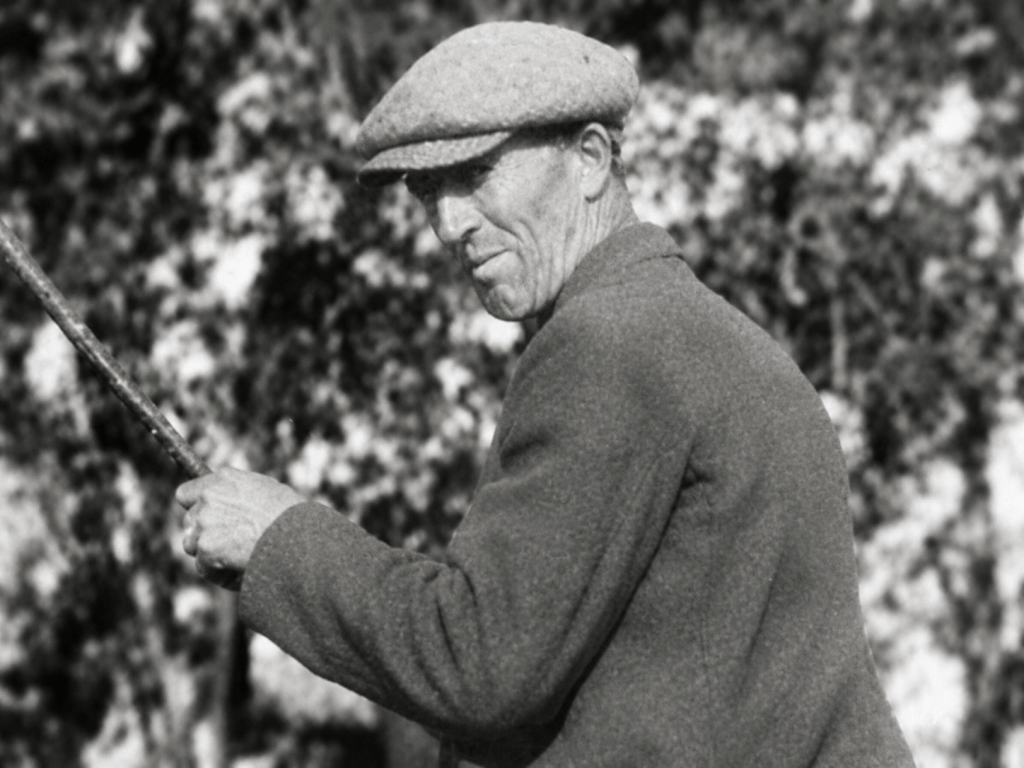
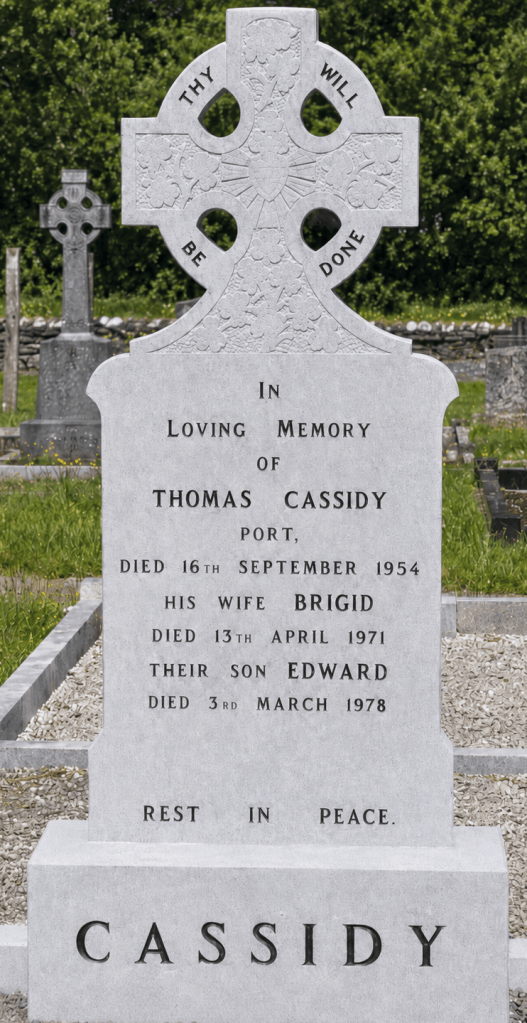
Thomas Cassidy
By then Mam had already been away from the farm of her childhood for many years.
Her father had died before any of her children were born, but Port remained part of the family landscape to which we returned.
Thomas Cassidy at Port Farm.
Bridget Cassidy
Mam’s mother, Bridget Cassidy, died in April 1971. I have no memory of her at Port and no photograph of her survives in the family material I have. My one memory of her is at Ballyloskey. She may by then have been too ill to remain at Port.
What stayed with me was something much smaller. She had a hat with a feather in it which remained in a wardrobe for many years afterwards. As a child, I associated it with a witch’s hat. It is one of those odd fragments of childhood memory that survives long after the circumstances around it have disappeared.
Summers in Port
Then came the summers in Port.
These are the years for which photographs begin to survive in numbers, and they are also the Port years that I remember for myself. The photographs do not form a perfect chronology, but together they preserve something more useful: the people, the house, the animals, the fields and the ordinary life of the farm.
Port was a place of considerable freedom for us as children, but it was never simply a holiday. There was work to be done, and much of it was hard, physical and manual.
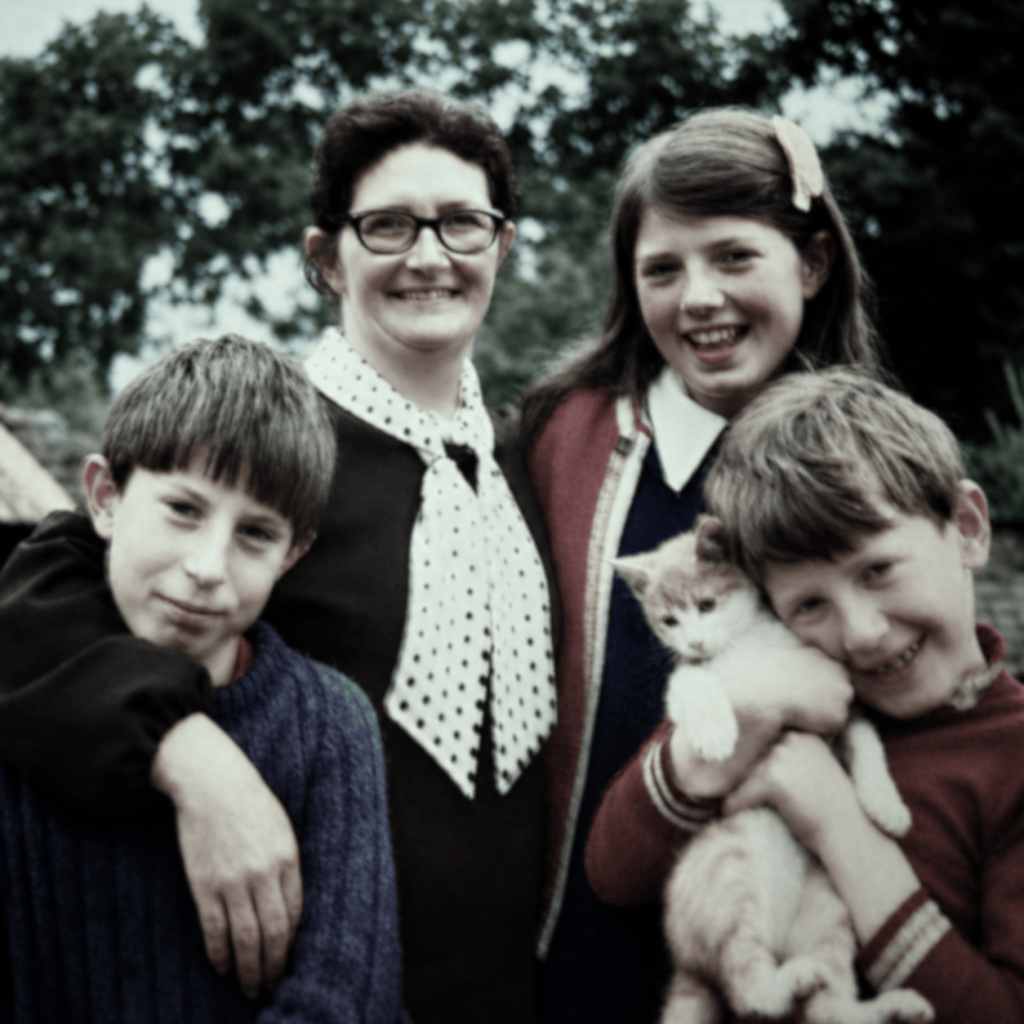
Mam and Crew
Mam with Anne, Sean and Eamonn at Port Farm.
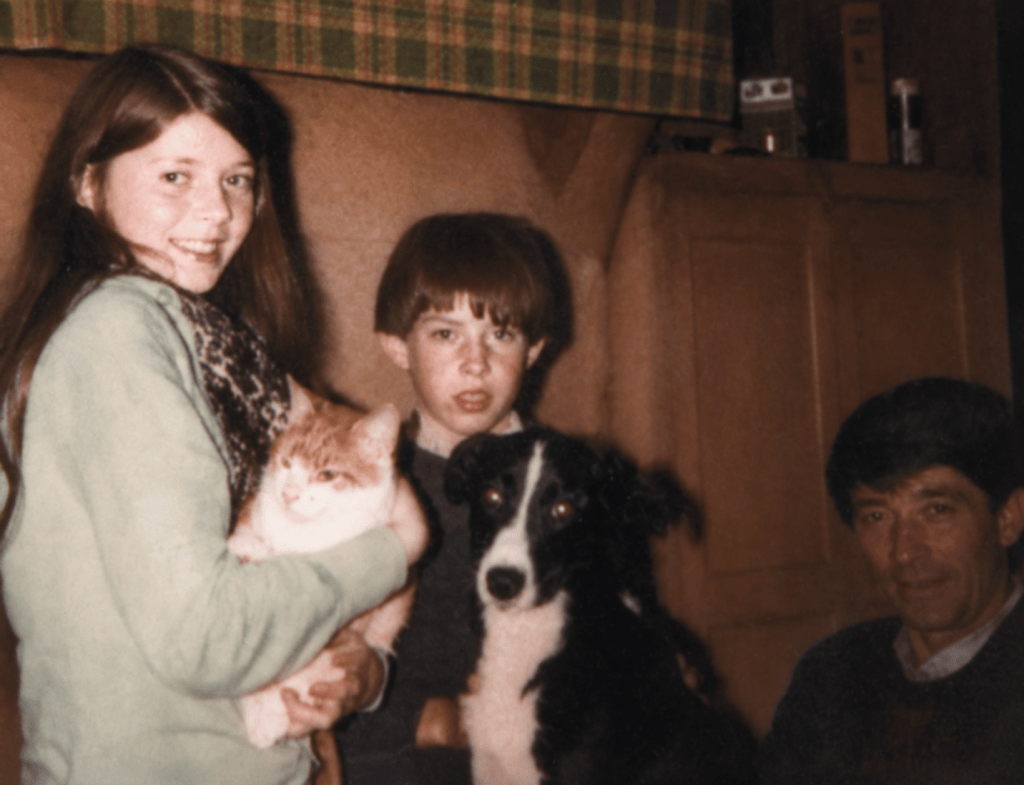
People and house
Left: Anne, Seán and Uncle E (Eddie Cassidy) at Port Farm.
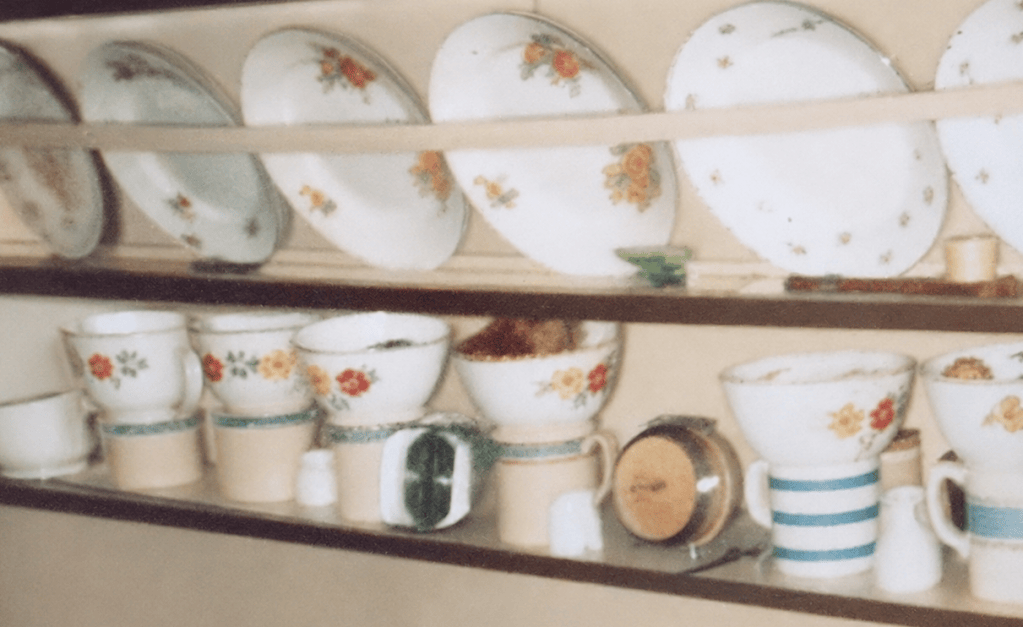
Right: The dresser in the farmhouse at Port.
Passing the time
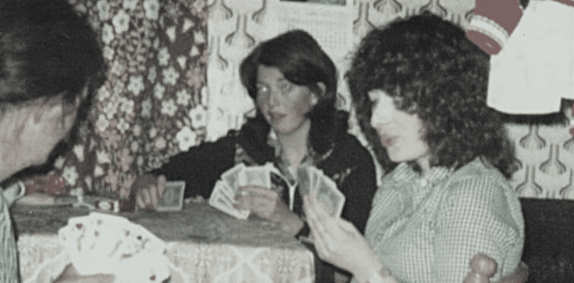
Mam, Anne and Breda at play.
The Work of Port
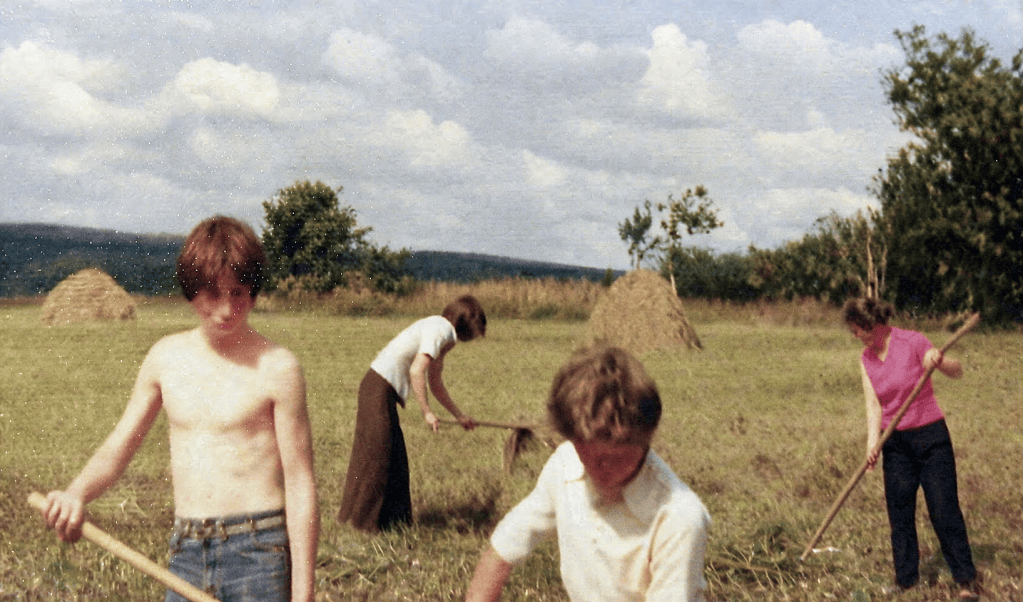
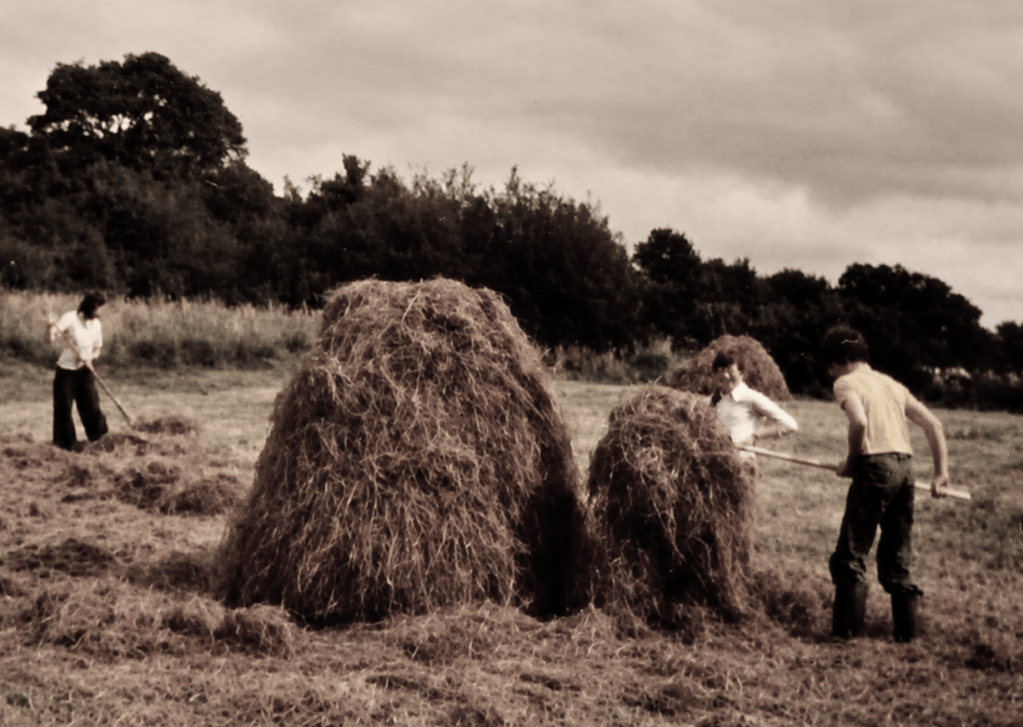
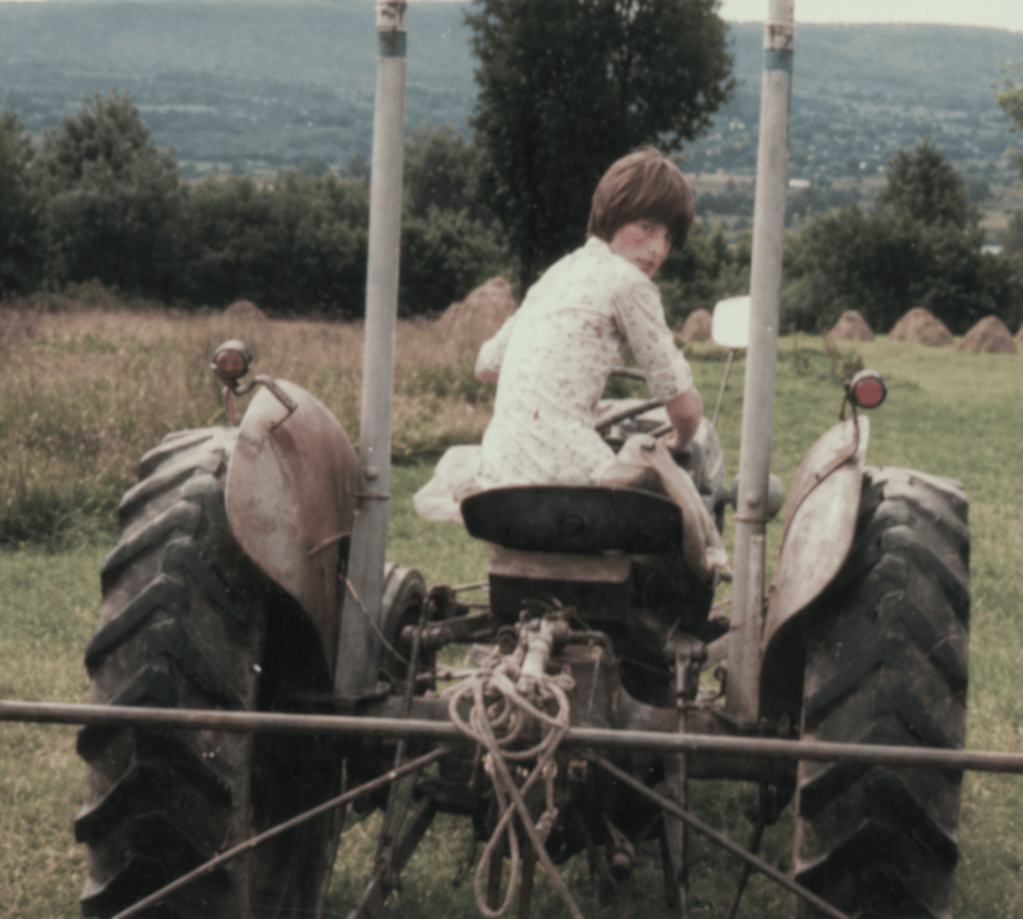
The work is perhaps the strongest memory preserved in the photographs. Hay had to be cut, gathered and built into rucks. There were animals to be looked after and machinery to be used, maintained and coaxed into doing what was required. Much depended on physical labour and the weather.
Mam was part of that work.
Port could also feel cut off from the outside world. Yet even there the wider world intruded. I remember the sight and sound of British helicopters passing overhead during the Troubles. Across the lough and along the border, events that seemed far removed from haymaking and farm work were never entirely distant.
Mam, Anne, Sean and Eamonn working in the fields at Port Farm.
Left: Making the hay rucks.
Right: Seán with tractor and buckrake.
Not all work
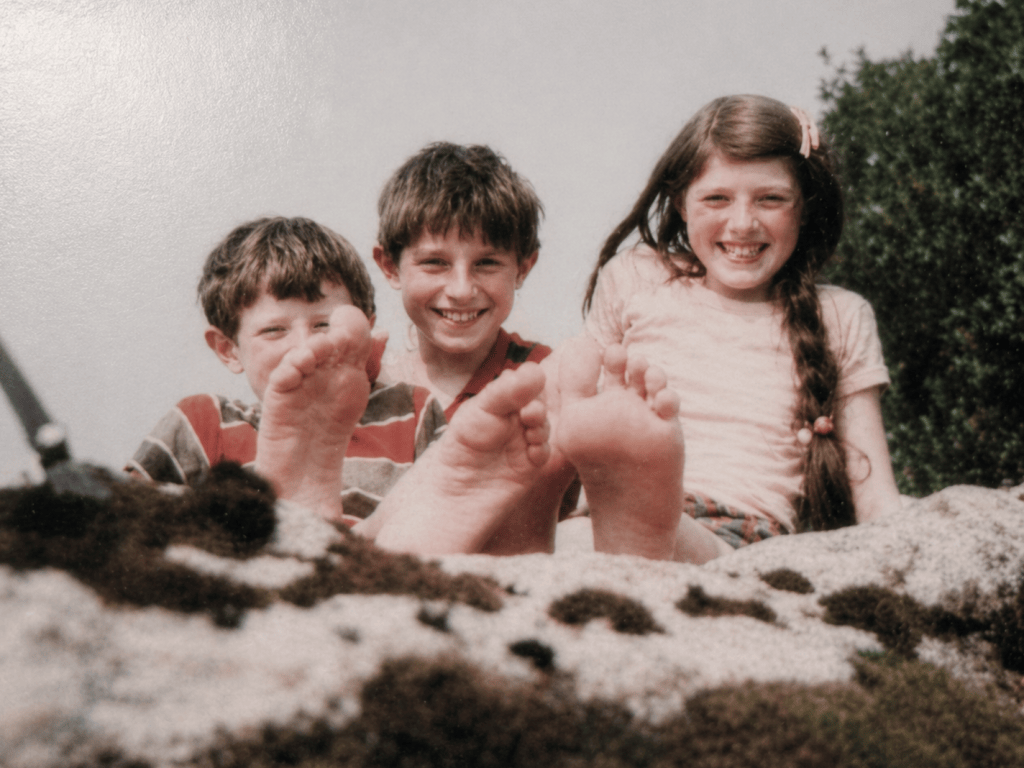
Heads, Shoulders, No Knees and a Few Toes (Anne, Seán and Eamonn)
Uncle E (Eddie Cassidy)
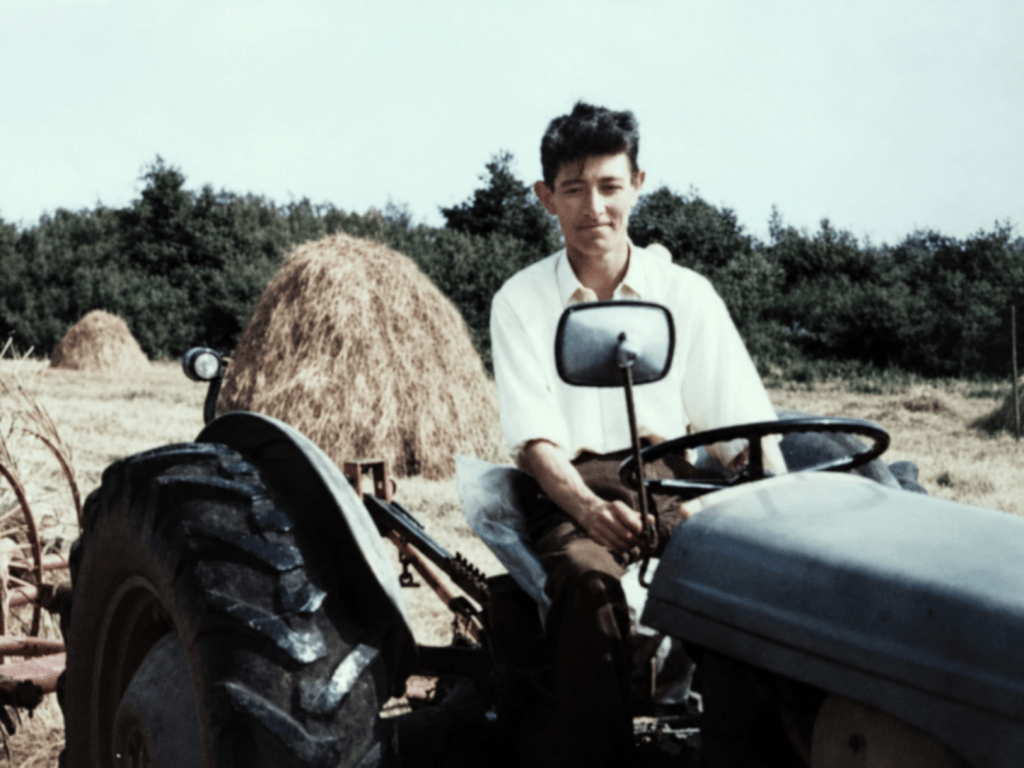
Mam’s only brother, Eddie Cassidy, was the personification of Port Farm. He was part of everything that was done there, in every season. He was at one with the animals, and they with him.
At some point he had suffered a fall on the farm in which he broke or cracked ribs. They were never properly attended to and continued to cause him pain. I remember seeing that pain myself, and the Sloan’s Liniment that was rubbed on in an effort to give him some relief.
He remained the captain of the ship, maintaining the farm until his death on 3rd March 1978, at the age of 47.
His death left Mam without her only brother and brought new responsibilities and challenges at Port.
Edward “Eddie” Cassidy at Port Farm.
The Cassidy family grave at Blacklion, Co. Cavan.
Taking Responsibility for Port
What happened next I know principally from what I saw rather than from the discussions that must have taken place.
Mam wanted to keep Port Farm going. I was not privy to conversations about the farm, its future or the practical decisions that followed Eddie’s death, and I do not want to pretend that I was.
What I do know is what became visible to me: Mam had inherited Port Farm, and it was no longer simply somewhere to which we returned for the summer. She now had to decide what was to become of it.
I think I was also aware that this changed something in the balance of the relationship between Mam and Dad. Port was hers, and decisions about its future now rested much more directly with her.
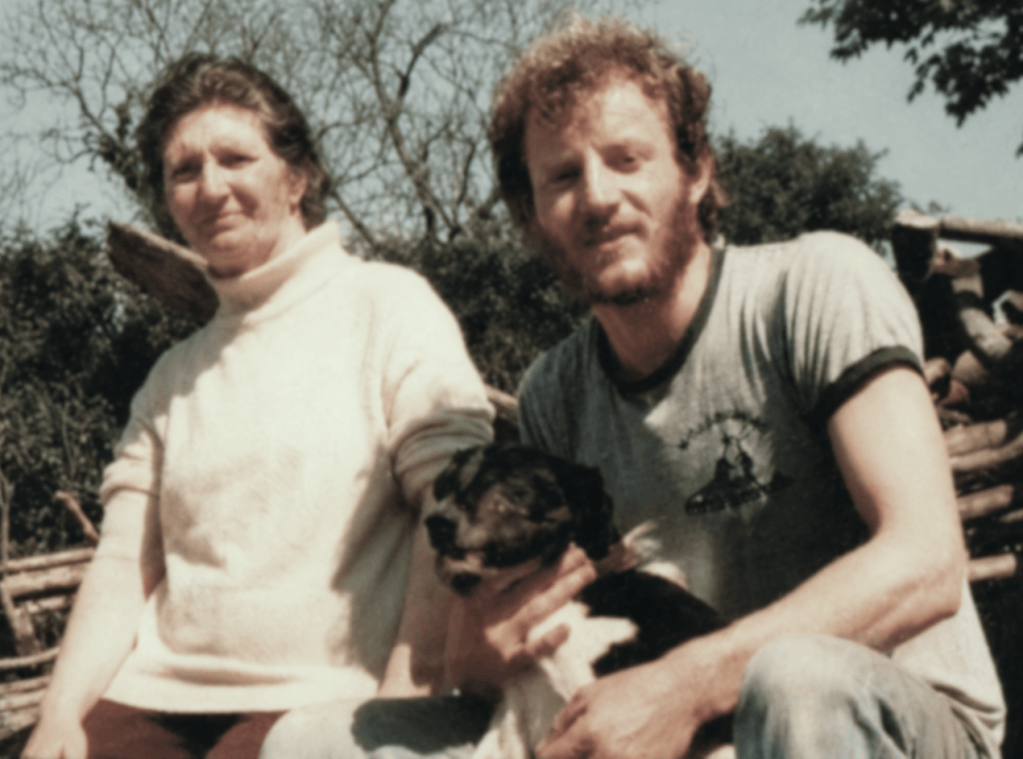
Mam at Port with Thomas
Mam and Dad at Port
The next thing I knew, Dad had given up his job as a bread salesman and had moved to Port.
That decision affected me directly. I moved to Cavan as well, even though I had only recently begun boarding school in Monaghan, following the same route through boarding school as my older brothers and Breda before me.
I do not remember discussions about why the move was made or how long it was expected to last. From a child’s point of view, the consequence simply arrived: Port was no longer only the place of summer holidays. Mam and Dad were living there.
For the next few years, Port became home from home.
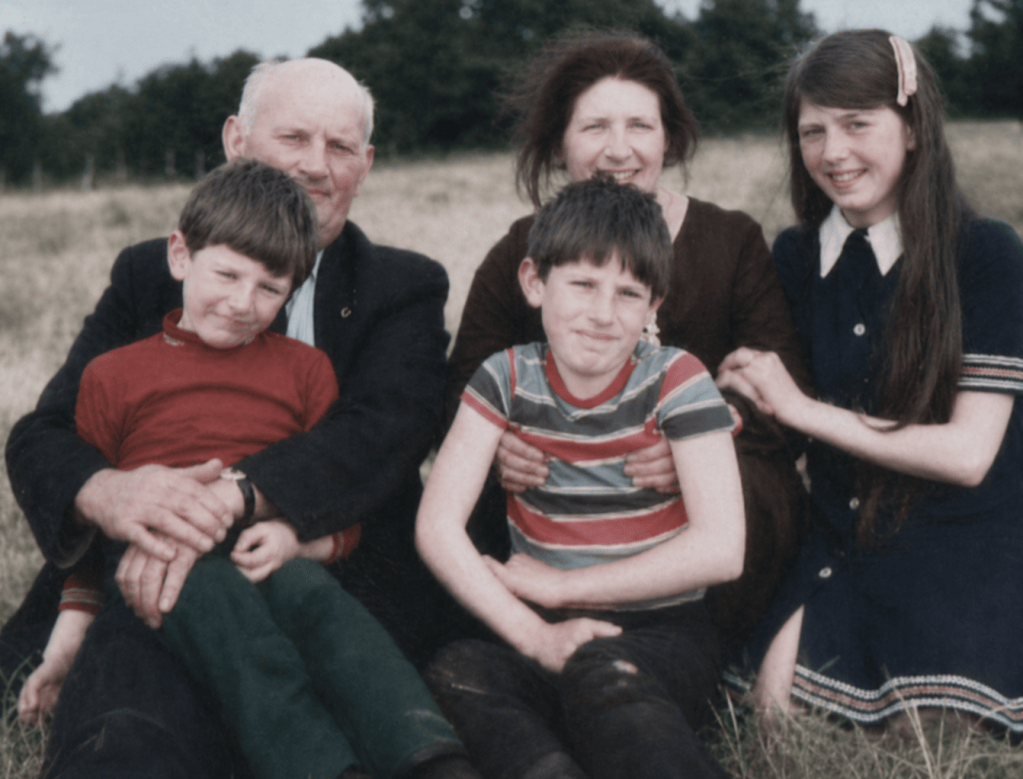
Mam and Dad and the wains
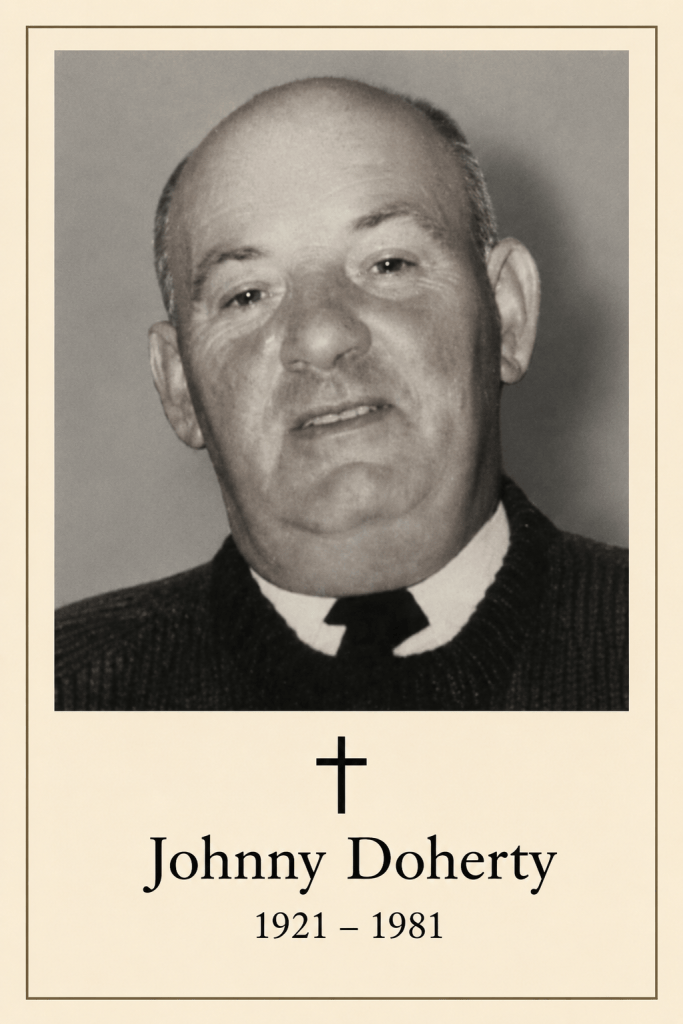
December 1981
That period ended with Dad’s death in December 1981.
There is no photograph in the surviving collection of Dad in what might be called his “farmer” years at Port. The images I have of him belong largely to his earlier working life as a bread salesman or to the family photographs taken at Port.
His death brought this particular chapter of our life there to an end. For me, it is also the natural point at which to end this part of Mam’s Port story.