Between 1941 and 1944, Anne Ellen moved from primary education at Brockagh to technical training in Manorhamilton. The journey itself — cycling from Port to Glenfarne and taking the train onwards — marked the beginning of a wider life beyond Port.
From Brockagh to Further Education
Anne Ellen’s education began at Brockagh National School, within the familiar rural world surrounding Port Farm. In 1941, when she was about fourteen or fifteen, she completed the Sixth Standard course and received her Primary School Certificate.
The certificate records her successful completion of the primary-school course in Irish, English, History, Geography, Singing, Arithmetic and Needlework. It marked the end of one stage of her education, but not the end of her schooling. Anne Ellen was about to enter a very different educational world.
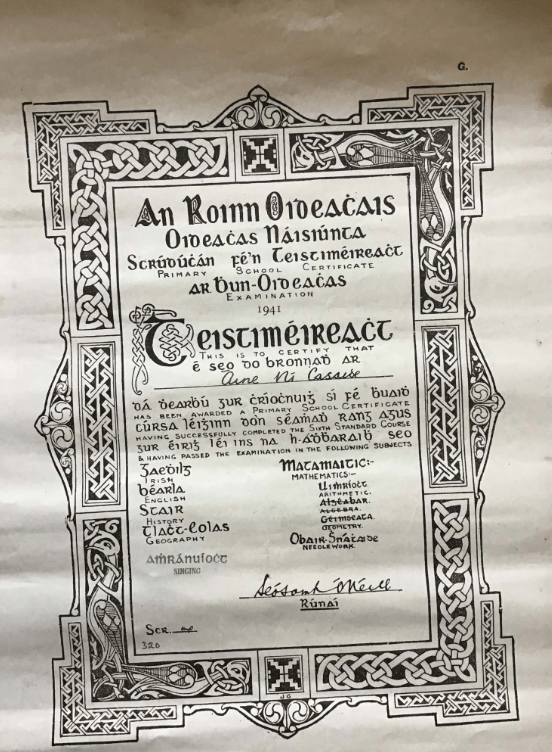
Anne Ellen Cassidy’s Primary School Certificate, 1941.
Education During the Emergency
Anne Ellen’s education from 1941 to 1944 took place during the Emergency, as the Second World War was officially known in neutral Éire. In the Cavan–Leitrim–Fermanagh border region, shortages, rationing, transport difficulties and wartime controls formed part of the background to ordinary life, while nearby Northern Ireland was directly engaged in the war. Her surviving certificates therefore belong not only to her educational story, but to unsettled years through which her studies nevertheless continued.
The Journey to Manorhamilton
Further education meant a much longer journey than the familiar road to Brockagh. From Port, Anne Ellen cycled to Glenfarne, where she caught the train to Manorhamilton on the Sligo, Leitrim and Northern Counties Railway.
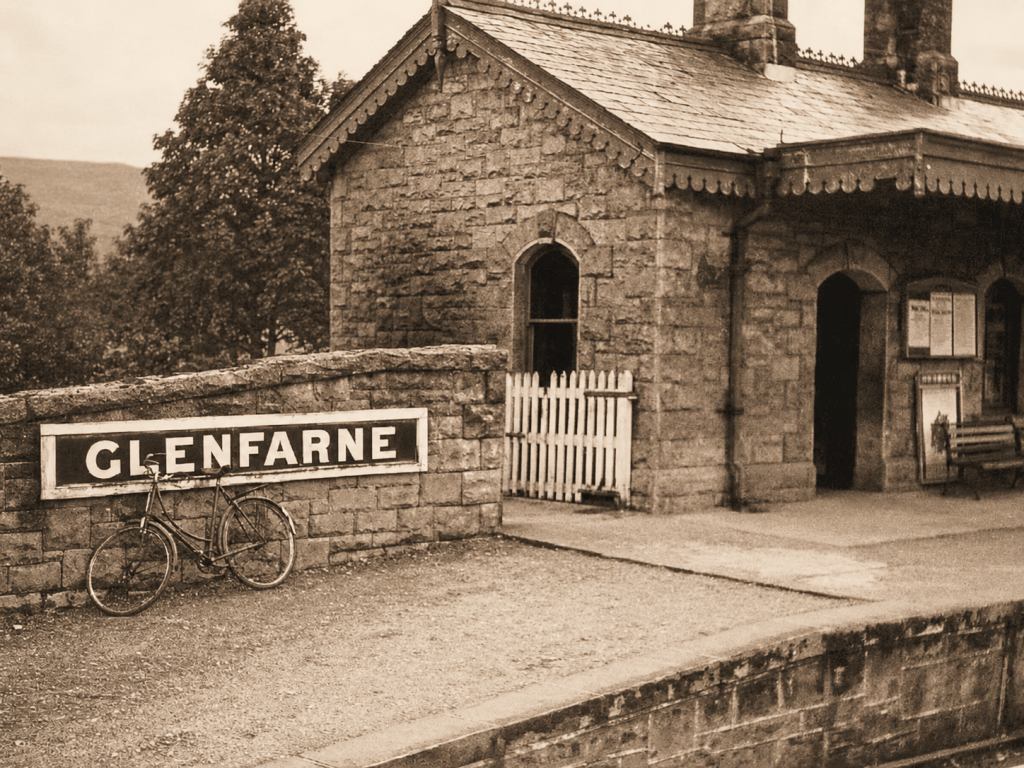
Glenfarne railway station.
Glenfarne was the railway starting point for Anne Ellen’s journey to Manorhamilton. She cycled there from Port before continuing by train.
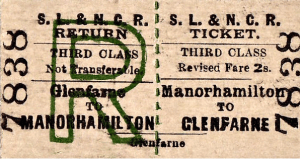
The third-class return fare shown on the ticket was 2 shillings (2s) — one tenth of a pre-decimal pound, or £0.10. Taking 1944 as a representative year for Anne Ellen’s journeys to Manorhamilton, this would have the purchasing power of approximately £5.76 today, or about €6.72 at the current exchange rate. The ticket itself is undated, so the modern equivalent should be regarded as approximate.
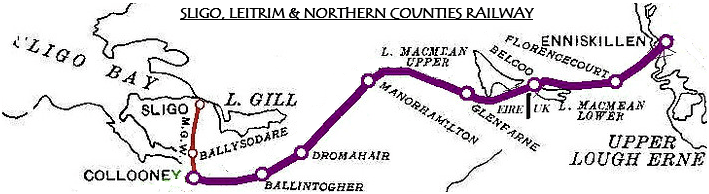
Route of the Sligo, Leitrim and Northern Counties Railway.
The railway ran between Sligo and Enniskillen, passing through both Manorhamilton and Glenfarne. For Anne Ellen, only a short section of the wider line was needed, but it connected Port with the town where she continued her education.
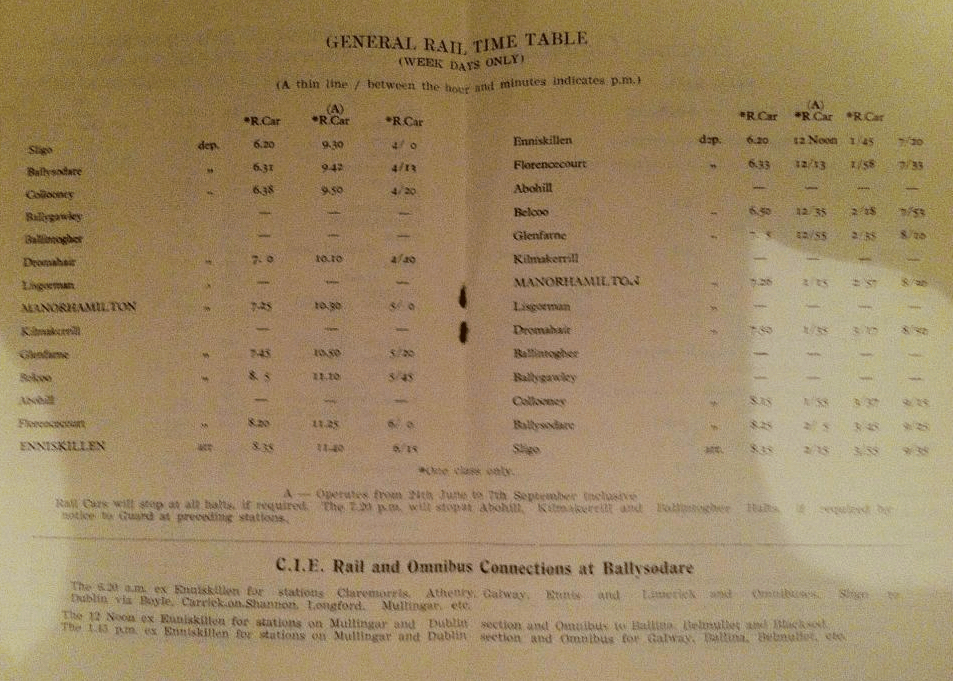
Sligo, Leitrim and Northern Counties Railway timetable.
This surviving timetable is included as an example of the service on the line rather than as the exact timetable Mam used.
Manorhamilton Technical School
At the end of the journey was Manorhamilton Technical School — known locally as “The Tech” — where Anne Ellen entered a very different kind of education from the national school at Brockagh.
Opened in 1935, Manorhamilton Technical School — known locally as “The Tech” — was the first post-primary school in North Leitrim. For pupils from rural homes such as Port Farm, it offered a different kind of education from the national-school system: practical, commercial and vocational training intended to prepare young people for adult and working life.
Anne Ellen attended the school during the early 1940s. Her surviving records place her there under the County Leitrim Vocational Education Committee, with her name appearing in Irish as Áine Ní Chasaide and Áine Ní Chasaidhe.
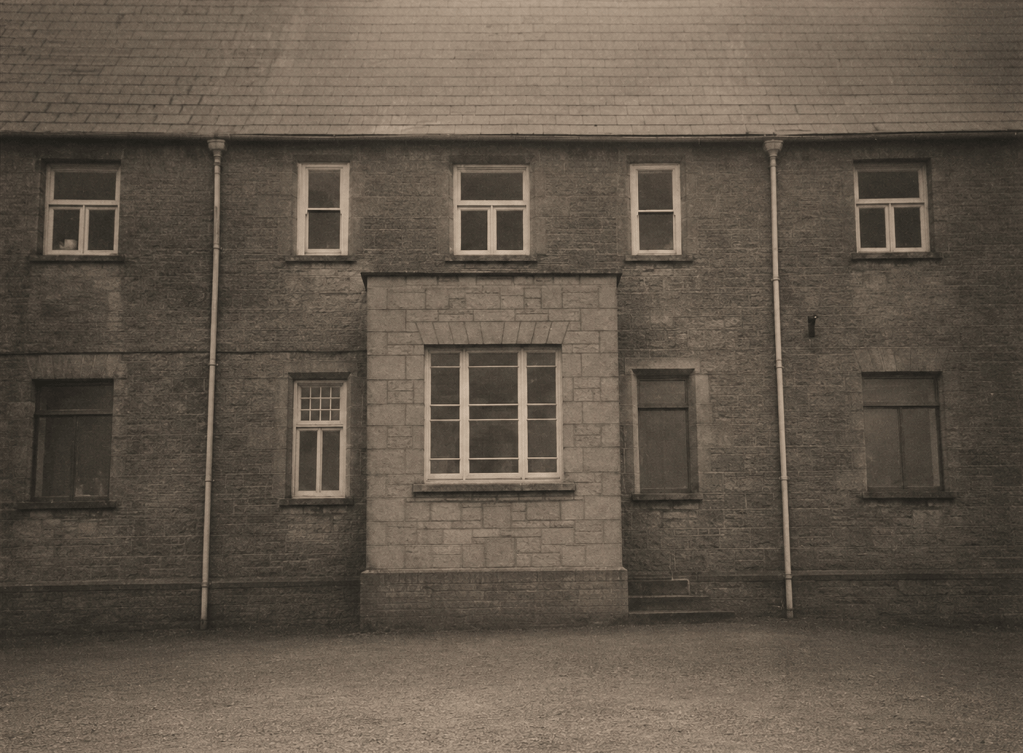
Manorhamilton Technical School — “The Tech”.
Her studies combined general education with practical and commercial subjects. The surviving examination reports show work in Irish, English, Arithmetic, Shorthand and Typewriting, Book-keeping and Business Methods, Domestic Science and Rural Science.
This was not the later Leaving Certificate system. Anne Ellen was part of the vocational education structure created in the 1930s, in which local Vocational Education Committees provided continuation and technical education alongside nationally recognised technical examinations.
1943 — A Broad Vocational Education
Anne Ellen’s 1943 records show her undertaking a broad second-year programme at Manorhamilton. Alongside Irish, English and Arithmetic were Shorthand and Typewriting, Book-keeping and Business Methods, Domestic Science and Rural Science.
Her examination report also records an attendance mark of 97, suggesting that despite the considerable journey from Port to Manorhamilton, her attendance was exceptionally regular.
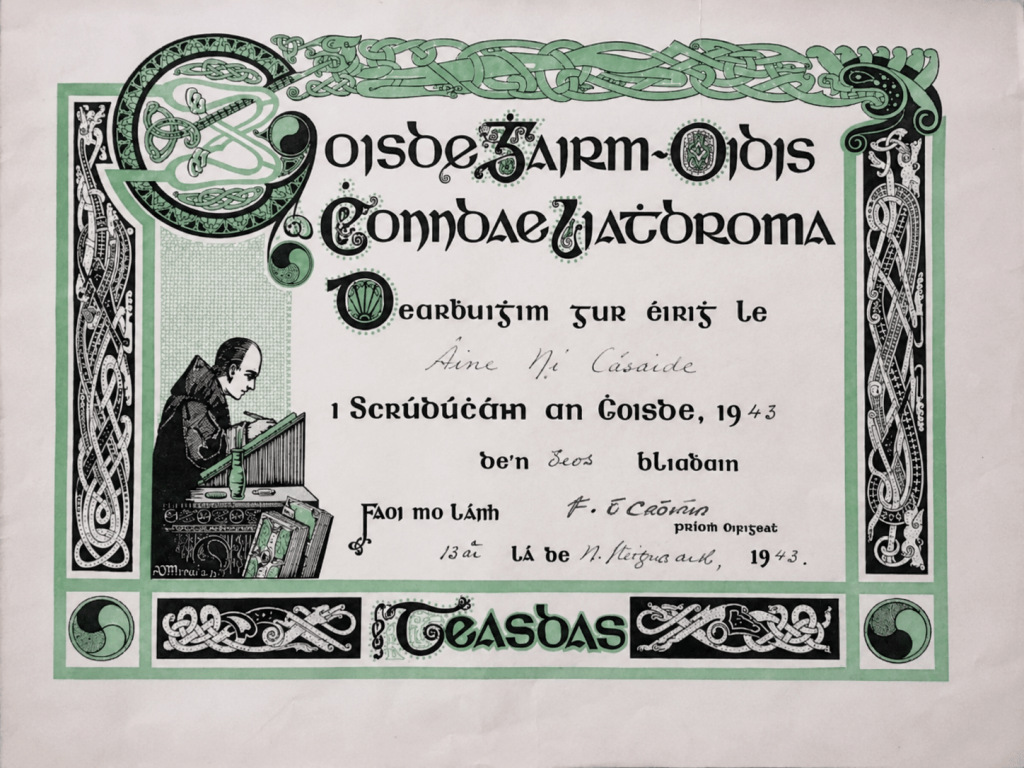
County Leitrim Vocational Education Committee Certificate, 1943.
View Anne Ellen’s 1943 examination report →
1944 — Towards Commercial Work
By 1944, the surviving records show a stronger concentration on commercial subjects. Anne Ellen continued with Irish and English while developing skills in Shorthand and Typewriting and in Book-keeping and Business Methods.
Her strongest recorded subject result that year was 74 in Book-keeping and Business Methods, while her recorded Progress mark rose to 82. The direction of her education was becoming increasingly practical and closely connected with the kind of work she would later undertake.
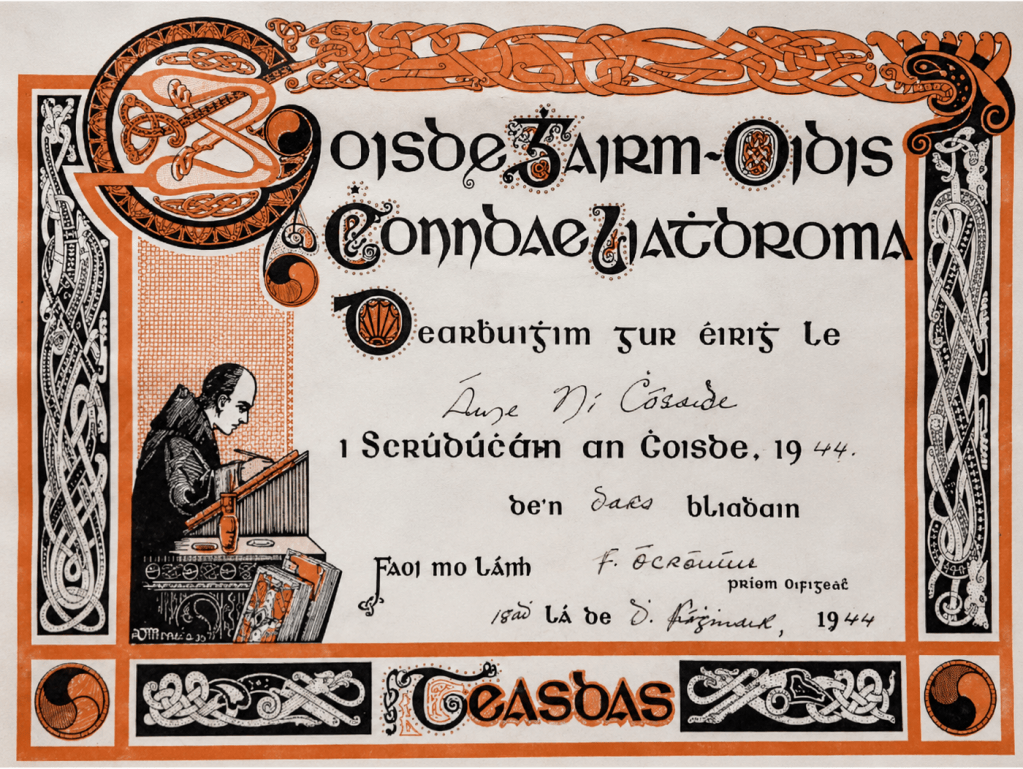
County Leitrim Vocational Education Committee Certificate, 1944.
View Anne Ellen’s 1944 examination report →
Technical Qualifications
Anne Ellen’s studies at Manorhamilton were accompanied by qualifications issued through the Department of Education’s Technical Instruction Branch.
Her Elementary Commerce Certificate records passes in Typewriting, Shorthand, Commercial Arithmetic and English, with First Class in Typewriting. She also received a Domestic Economy Certificate for practical cookery.
These certificates are significant for another reason. Here, for the first time in the surviving written record, her name appears as “Annie Cassidy.” Earlier documents had recorded her as Anne Ellen or in Irish as Áine Ní Chasaide / Ní Chasaidhe. The appearance of “Annie” therefore marks the earliest documentary evidence we have of that familiar form of her name.
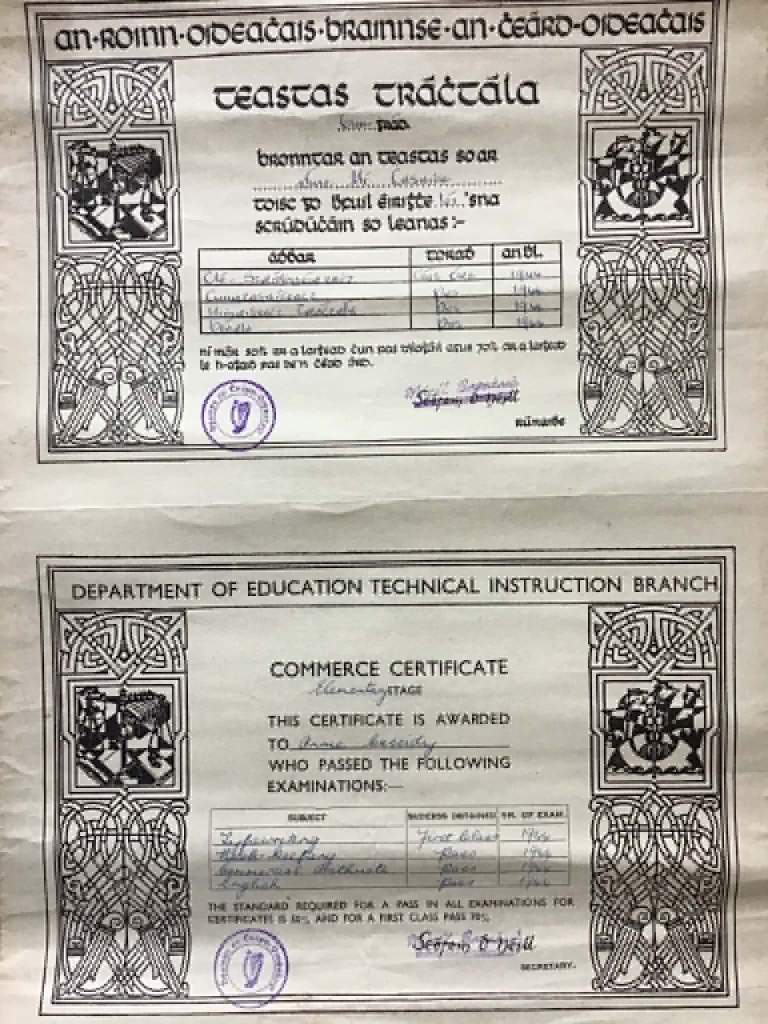
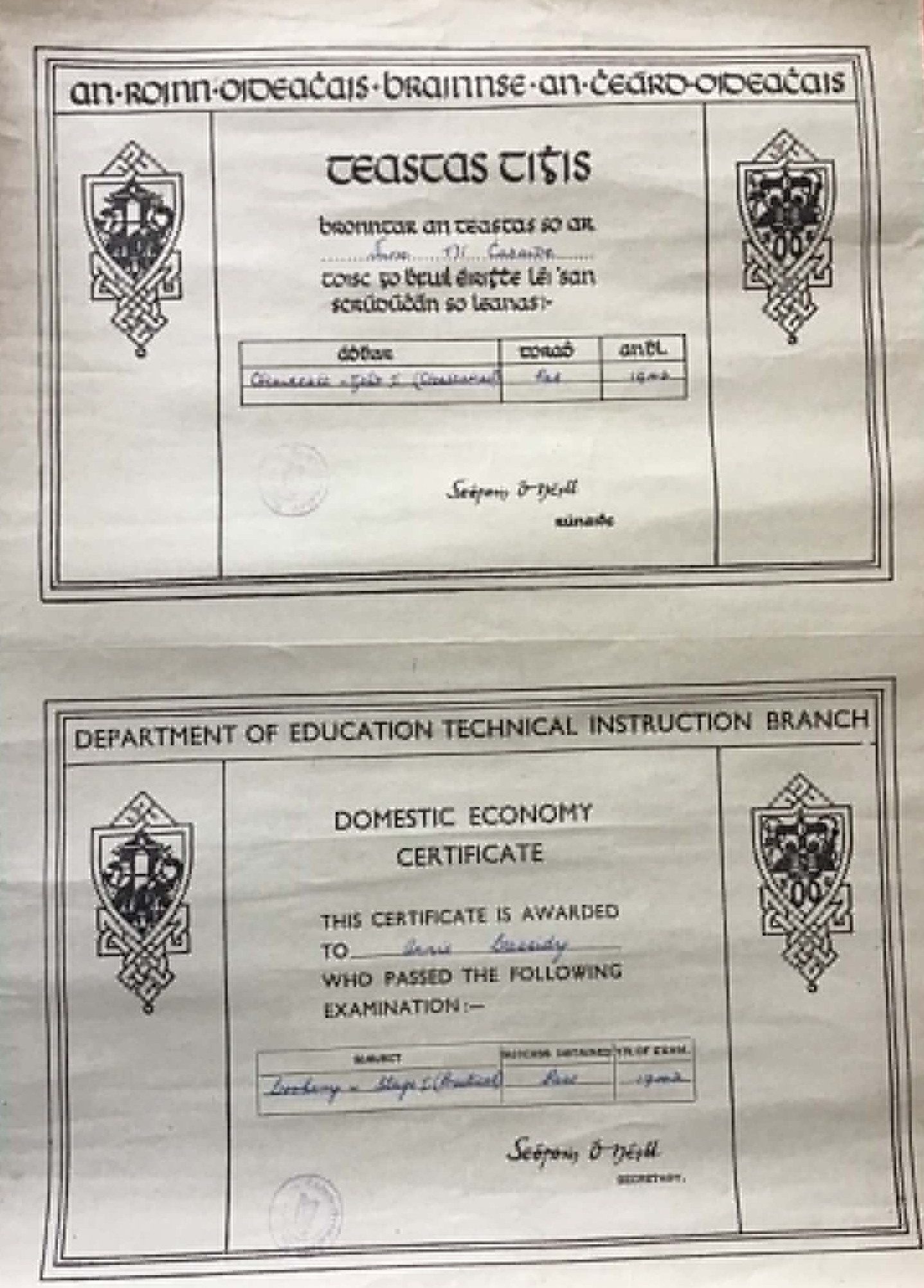
Department of Education Elementary Commerce & Domestic Economy Certificates, 1944.
Preparing for Adult Life
Taken together, the surviving certificates trace Anne Ellen’s progress from the Primary School Certificate in 1941 to vocational and technical training in Manorhamilton in 1943 and 1944.
Her education had expanded from the general subjects of primary school into shorthand, typewriting, book-keeping, business methods and practical training. These were skills with a direct application beyond the classroom.
By the end of 1944, Anne Ellen had completed an education that had taken her physically and educationally beyond Port. The next step would no longer be another classroom, but work.